Kathmandu Disco Clubs
“Disco club” in Kathmandu covers two different things simultaneously, and knowing the distinction shapes which night you’re actually looking for. The first is legal: Nepal’s nightlife licensing system uses “discotheque” as the official classification for full-scale nightclubs — it’s the venue category that gets the latest permitted closing times in the Kathmandu Valley, around 4am, versus 2am for lounges and dance bars.
The second is aesthetic: 2026 has brought a genuine global disco and Y2K revival through nightlife culture, and Kathmandu’s clubs are part of it — metallic fabrics, glitter ball lighting effects, and funk-influenced DJ sets sit comfortably alongside EDM and house in the city’s bigger venues.
Both of these threads are worth following, and they converge in Thamel, where most of what the city calls a “disco” actually lives.
How the Disco Classification Works in Kathmandu
Nepal’s nightlife operates under a tiered licensing system administered by the Kathmandu Valley authorities. Venues licensed as full discotheques and clubs can legally operate until around 4am. Lounges and dance bars run until around 2am. Restaurants generally close around midnight. This tiered structure means that venues which carry “discotheque” or “disco” in their name or licensing category are, by definition, the city’s full-scale nightlife venues — the ones built for a long night rather than an early finish.
Full discotheques and clubs in Kathmandu Valley are permitted to operate until around 4am under the local regulatory framework — considerably later than most of Kathmandu’s other nightlife venues.
This matters practically: when you’re looking for a “disco club” in Kathmandu, the venues that have formally held this classification tend to be the city’s longest-running and most established nightlife destinations, because the licensing reflects a physical and operational investment that casual bar-with-a-speaker venues don’t make.
The Retro Disco Revival in 2026: What’s Actually Happening
Before venue names, it’s worth understanding the aesthetic context because it shapes what a “retro disco night” in Kathmandu actually looks and sounds like in 2026.
Disco-inspired shine is everywhere for 2026 — silver mini dresses, shimmer cutouts, and satin slip dresses with a metallic finish all tap into the Y2K and disco revival running through global nightlife. This isn’t a Kathmandu-specific trend — it’s a global one that Kathmandu’s bigger clubs are actively part of, particularly in how their lighting rigs interact with reflective materials on the dance floor.
The DJ programming context matters too. Kathmandu’s bigger clubs run a musical mix that naturally accommodates the disco revival: house, commercial EDM, funk-influenced tracks, Bollywood classics with a dance-floor sensibility, and Nepali pop — a rotation that pulls from disco’s DNA even when it isn’t specifically curated as a retro night.
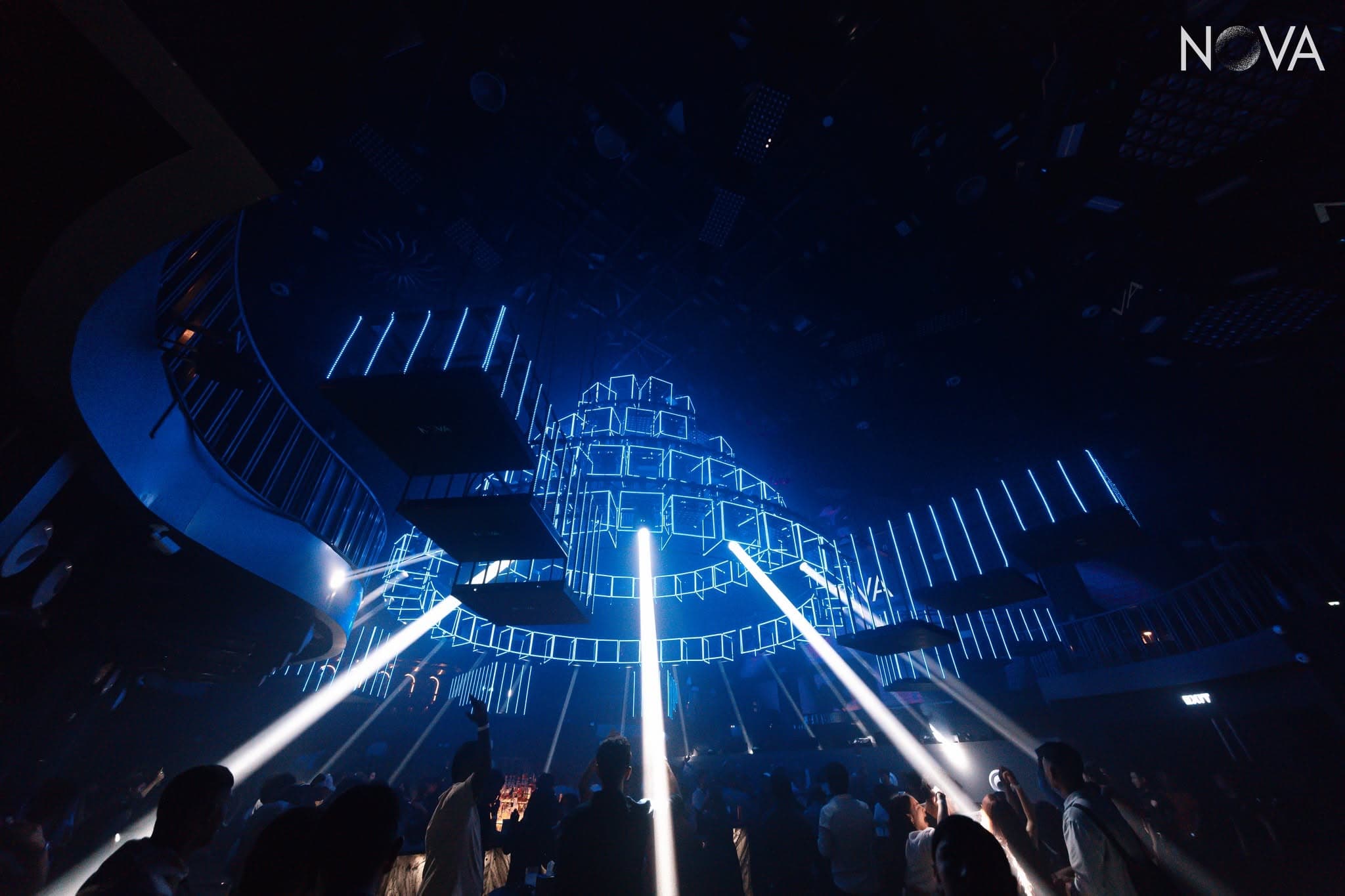
The hydraulic lighting rigs at Club Nova and LOD, the mirrored ceiling elements, the glitter-ball aesthetic running through several Thamel venues — these aren’t accidents. They’re design choices that deliberately reference the discotheque’s visual language while running forward-facing programming.
Club Nova — Where the Disco Scale Actually Lives
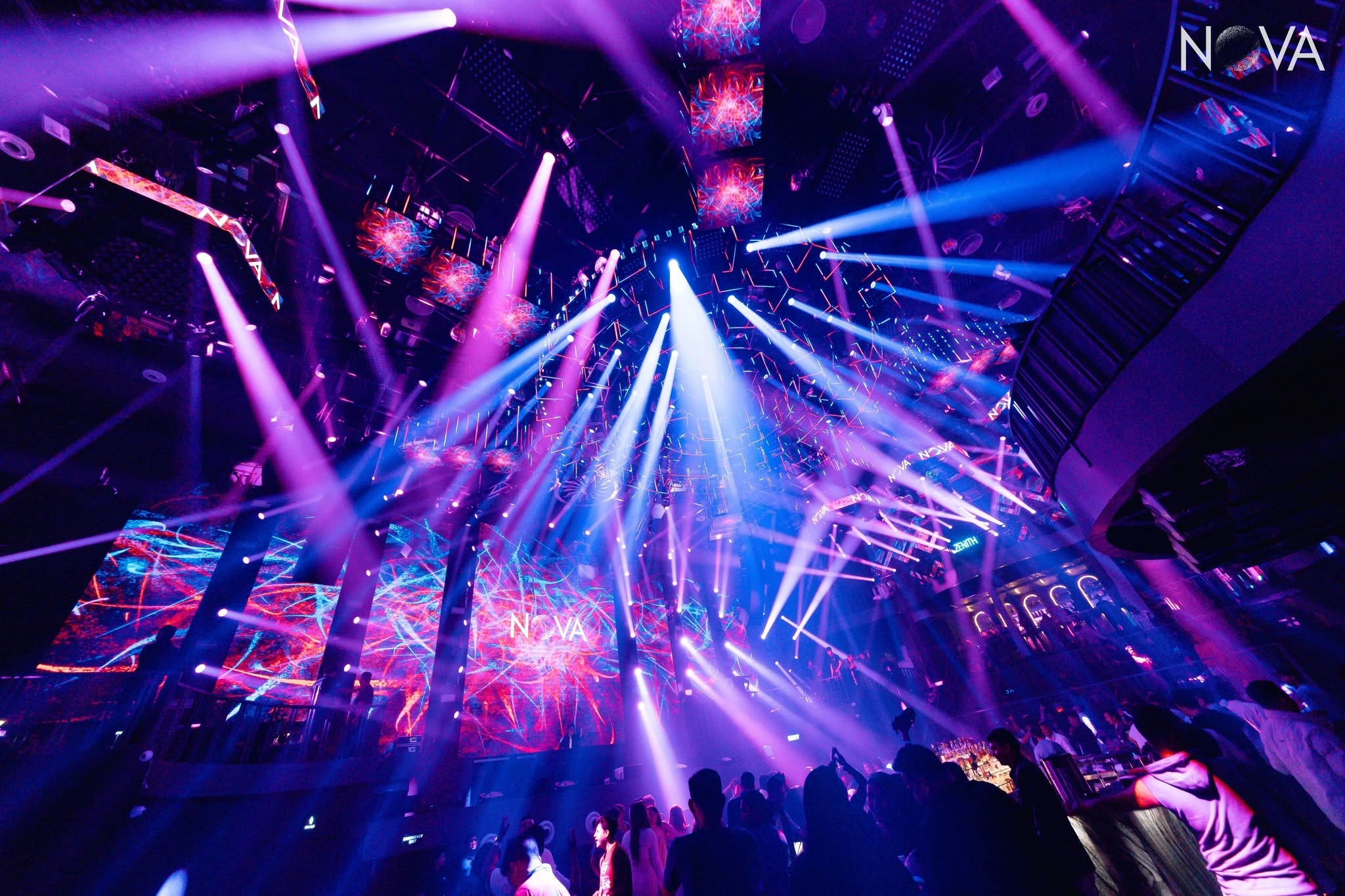
Club Nova on Chaksibari Marg, Thamel-16, is the biggest discotheque-format venue in Nepal — roughly 1,300 square meters and 2,500 capacity, purpose-built with sweeping curved decks, a hydraulic ceiling lighting system, and a sound system designed for a room this size. Its architecture references the discotheque’s core premise — a large, visually produced space where the lighting and the crowd are as much a part of the experience as the music — at a scale nothing else in the country matches.
Club Nova hosts resident and guest DJs playing a mix of EDM, house, commercial hits, and Bollywood, with regular live performances and special themed nights that vary throughout the year. On NOVA FRIDAY — the venue’s weekly flagship night — the full hydraulic ceiling rig runs, the crowd fills the curved main floor, and the combination of production and scale produces the kind of large-room disco energy that the term originally described before it narrowed to a single genre.
For special themed nights, Club Nova’s size and production infrastructure give it more flexibility than any other venue in the city. Themed events — including retro, 80s, and decade-specific nights — can be run at Club Nova with a full lighting and sound production that smaller venues can’t match. Check theclubnova.com and the venue’s Instagram for the current events calendar, since themed nights are typically announced one to two weeks ahead.
VIP table booking runs across three tiers — Elite, Privilege, and Diamond — bookable in advance via theclubnova.com or by calling 9705420751 / 9705420752.
LOD (Lord of the Drinks) — Discotheque With International Credentials
LOD in Bhagwatisthan, Thamel, operates under the same discotheque licensing format and holds the most verifiable international credential in Kathmandu’s nightlife: ranked No.40 globally in the DJ Mag Top 100 Clubs in 2026 — its seventh consecutive year on the list and its highest ranking to date.
The big names in the booth are equalled by the scale of production — powerful hydraulic lights and a supercharged d&b audiotechnik sound system, with captivating dancers and occasionally trapeze performers. The hydraulic chandelier is the venue’s most specific visual reference to the discotheque tradition — a centrepiece lighting element that moves and shifts through the night rather than sitting static above the floor. Under the right DJ set, LOD’s combination of the chandelier, the laser system, and the arena-style sightlines produces the closest thing to a classic discotheque atmosphere available in modern Kathmandu.
LOD has hosted more than 100 international artists since opening in 2019, including Alok, Timmy Trumpet, Mr. Pig, VINAI, Ayo & Teo, Quintino, Tom & Collins, Plastik Funk, Burak Yeter, and Wasback. Music runs across EDM, house, hip-hop, commercial hits, and Bollywood — the mix that naturally carries disco DNA without being specifically retrograde about it.
Fire Club Discotheque — The Original Name
Fire Club Discotheque is located in the central part of Thamel and is open from 8pm to 6am — one of the longest operating windows of any venue in the city. Fire Club, formerly known as a brand name in the disco scene, has been operating since 2001 — making it the longest-running discotheque-classified venue in Kathmandu under that specific name.
There are two different compartments in the venue: one side for live game watching, and another for music and dancing, with the dance floor located in the center of the dancing compartment. The entry fee is free for foreigners, while Nepali nationals pay to enter.
Fire Club’s operating history predates most of what Kathmandu’s current club scene has become, which gives it a specific character — it’s genuinely old-school in a way the newer venues aren’t, and its name directly references the discotheque tradition. For visitors who want a club that actually carries a piece of Kathmandu’s original disco culture rather than a 2021 reinvention of it, this is the name worth knowing.
Ibyza Lounge & Disco-Theque — Spanish-Inspired Late Night
Nestled in the vibrant heart of Thamel, Ibyza Lounge & Disco-Theque is a must-visit for anyone looking to experience the electric nightlife of Kathmandu. This lively venue boasts a unique Spanish-inspired atmosphere, complete with talented DJs spinning tracks that will keep you dancing all night long. With an impressive 10-hour operating window, it’s perfect for those who want to escape the hustle and bustle of the city.
The “Disco-Theque” in the venue’s name is deliberate — Ibyza specifically references the classic discotheque format in its branding, and the operating hours (7pm to 5am) reflect the full-discotheque licensing category rather than a lounge or dance bar. From the outdoor cover to the bar inside, the view, the atmosphere, and the drinks are all excellent. The security arrangements are well-managed, and the behavior of the staff is lovely.
Ibyza’s Spanish theme sets it apart visually from the more production-heavy clubs. It’s a different kind of discotheque atmosphere — warmer and more Mediterranean in character than the laser-and-hydraulic-chandelier format of Club Nova and LOD — which suits a different kind of crowd and a different kind of night.
Senate Club — Disco, Techno, and Electro Until 5am
Senate Club on JP Street in Thamel operates from 7pm to 5am with a two-story layout, a spacious dance floor, and live band and DJ sessions most nights. Its music programming is the most explicitly retro-adjacent of any venue in Thamel: music rotates across disco, techno, and electro — a rotation that specifically names disco as a genre rather than subsuming it under “commercial EDM.”
This makes Senate the most direct answer for anyone specifically seeking a retro-disco genre night rather than just the discotheque format. The predominantly local crowd gives it a different energy from the tourist-heavy bigger clubs, and the late 5am closing time means a night here genuinely runs as long as the original discotheques did.
Club Venice Discotheque — Relaxed Door, Themed Nights
Club Venice Discotheque runs themed nights and draws a younger, dance-focused crowd. It’s less hyped than Club Nova or LOD but tends to be more relaxed about door policy and pricing, making it a solid alternative when the bigger venues are at capacity.
The “Discotheque” classification in Club Venice’s name reflects its licensing category and its format — a genuine dance floor, DJ programming, and themed nights — rather than a specific genre identity. It operates at a scale below Club Nova and LOD, which makes it less overwhelming for a group that wants a discotheque atmosphere without the full production of the biggest venues.
The Retro Aesthetic in 2026: What to Wear
The disco revival has a direct dress code implication for a Kathmandu club night in 2026. Silver mini dresses, shimmer cutouts, satin slip dresses with a metallic finish, and sequin dresses — which reflect every beam of light in the room — are the dominant visual language of nightlife in 2026, tapping into the Y2K and disco revival running through global club culture.
Under Club Nova’s hydraulic ceiling rig or LOD’s hydraulic chandelier, metallics and sequins interact with the lighting design in a way that solid, non-reflective fabrics simply don’t. Dressing for a retro-disco themed night in Kathmandu — or for a regular Friday where the disco revival aesthetic is running through the crowd — means leaning into exactly these materials rather than away from them.
For men, the disco revival appears through satin-finish shirts, velvet blazers, and tailored wide-leg trousers that reference the 70s silhouette without being a costume. Smart-casual at Club Nova is the floor; the disco revival opens up the ceiling — a vintage-influenced blazer over a good shirt reads deliberately retro rather than accidentally underdressed.
Night-of-Week Strategy for a Disco Night in Kathmandu
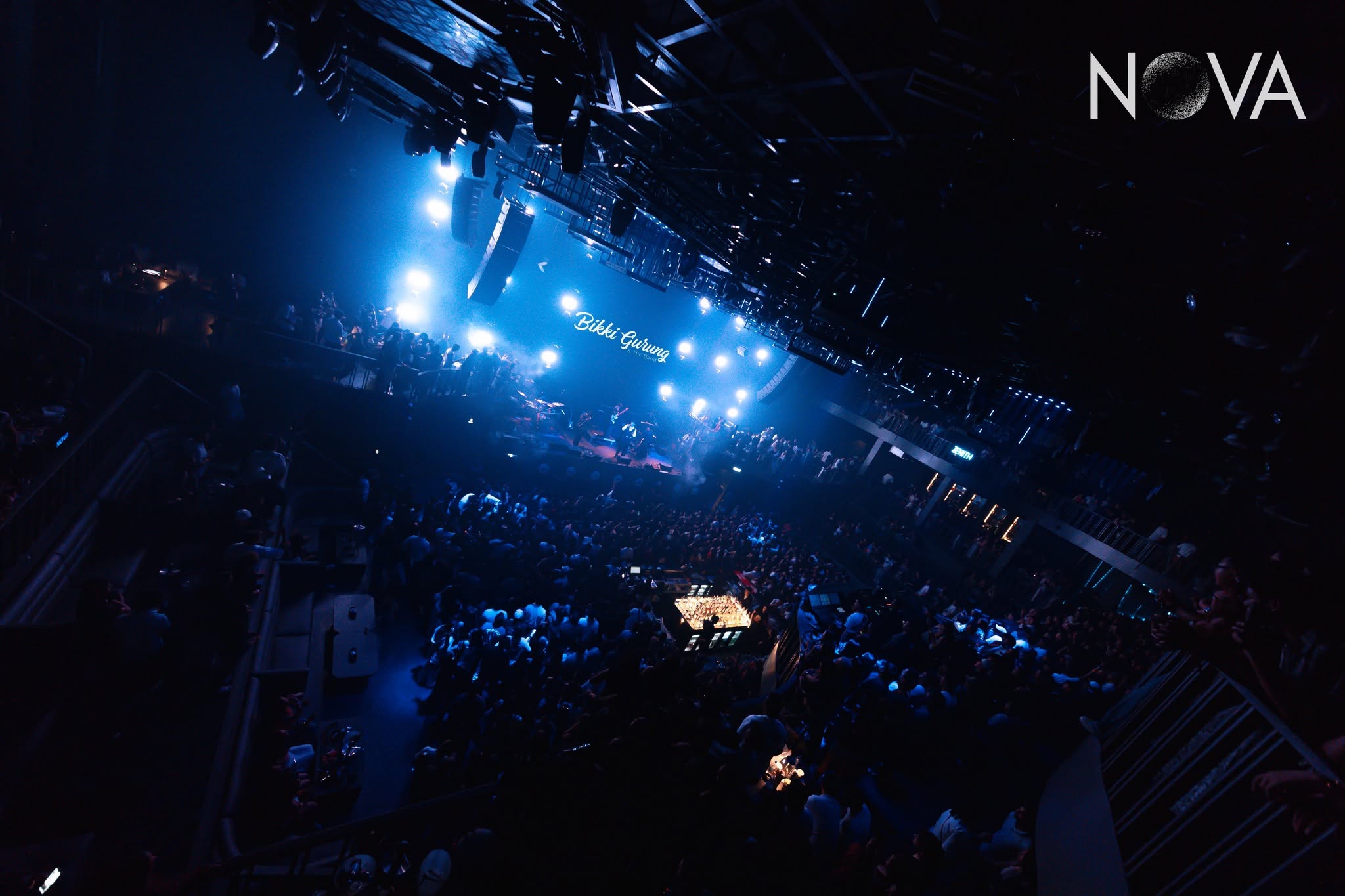
The right night changes what a Kathmandu disco club delivers. Friday is consistently the strongest night across all the major discotheque-format venues — the fullest floors, the most produced DJ sets, the best crowd energy. NOVA FRIDAY at Club Nova is the highest-attendance single night of the week; LOD’s Friday nights draw the most international-focused bookings.
For retro-specific programming, the best move is to follow Club Nova’s and Senate Club’s event calendars directly — both venues announce themed nights (including any decade-specific or retro-disco nights) on their Instagram pages one to two weeks ahead. Showing up on a random Thursday hoping for a retro night is less reliable than checking the calendar and arriving on a night specifically programmed around it.
At a Glance
| Venue | Classification | Retro/Disco Element | Closing Time | Best For |
|---|---|---|---|---|
| Club Nova | Full discotheque | Hydraulic lighting rig, themed nights | ~4am | Largest floor, peak production |
| LOD | Full discotheque | Hydraulic chandelier, d&b sound | ~4am | International DJ quality |
| Fire Club | Full discotheque | Original disco heritage since 2001 | 6am | Old-school Kathmandu |
| Ibyza | Full discotheque | Spanish-themed, retro in name | 5am | Late-night, warm atmosphere |
| Senate Club | Full discotheque | Specifically plays disco/techno/electro | 5am | Genre-specific retro night |
| Club Venice | Full discotheque | Themed nights, relaxed door | — | Alternative to bigger venues |
Practical Notes
- Dress code: Smart-casual at Club Nova, LOD, and Ibyza on standard nights; dressing up encouraged for VIP areas and special events. Lean into metallics and sequins on themed or retro-specific nights — the lighting rigs at the bigger venues are built for exactly these materials. At Fire Club and Senate, the door policy is more relaxed.
- Entry fees: Entry at Thamel’s full discotheques runs roughly NPR 500–1,000 on standard nights, with special event and themed nights priced separately. Fire Club Discotheque offers free entry for foreign nationals, with Nepali nationals paying to enter. Ibyza charges NPR 800–1,000 for special event nights.
- Closing times: Kathmandu Valley’s regulations permit full discotheques to operate until around 4am. Fire Club runs until 6am, and both Senate and Ibyza operate until 5am — the longest windows in the city.
- Getting home: Ride-hailing apps Pathao and InDrive fix the fare before the ride starts and cover Thamel reliably through the early hours — the most practical option for a 4am or 5am finish.
Frequently Asked Questions
- What is a discotheque in Kathmandu? In Nepal’s nightlife licensing context, a discotheque is the full-scale nightclub classification — the venue type permitted to operate the latest hours (around 4am and beyond) under Kathmandu Valley regulations. Club Nova, LOD, Fire Club, and Ibyza all operate under this classification.
- Is there a retro disco scene in Kathmandu? Yes — both through themed nights at Club Nova and Senate Club’s regular programming of disco, techno, and electro. The broader 2026 disco/Y2K revival is also visible in the metallic-and-sequin aesthetic running through the crowd at the bigger venues.
- Which Kathmandu club specifically plays disco music? Senate Club on JP Street specifically names disco, techno, and electro in its regular music rotation — the most genre-specific answer. Club Nova and LOD incorporate disco-influenced tracks into broader commercial/house/EDM DJ sets.
- Which is the oldest discotheque in Kathmandu? Fire Club Discotheque, which has been operating since 2001, making it the longest-running venue using the discotheque name in the city.
- What should I wear to a disco club in Kathmandu? Smart-casual is the baseline at the bigger venues. For a retro or themed disco night, lean into metallics, sequins, and the Y2K revival aesthetic — silver mini dresses, shimmer cutouts, and metallic-finish satin all interact with the hydraulic lighting rigs at Club Nova and LOD in a way that reflects the disco tradition.
- What time do disco clubs close in Kathmandu? Full discotheques under Kathmandu Valley regulations can operate until around 4am. Fire Club runs until 6am, and both Senate Club and Ibyza operate until 5am.
Final Take on Kathmandu Disco Clubs
Kathmandu’s disco clubs in 2026 span two distinct tracks: the legal-classification discotheques that run the city’s longest nights and largest floors (Club Nova, LOD, Fire Club, Ibyza, Senate), and the retro-aesthetic disco revival that’s running through the crowd and the DJ programming at the bigger venues this year.
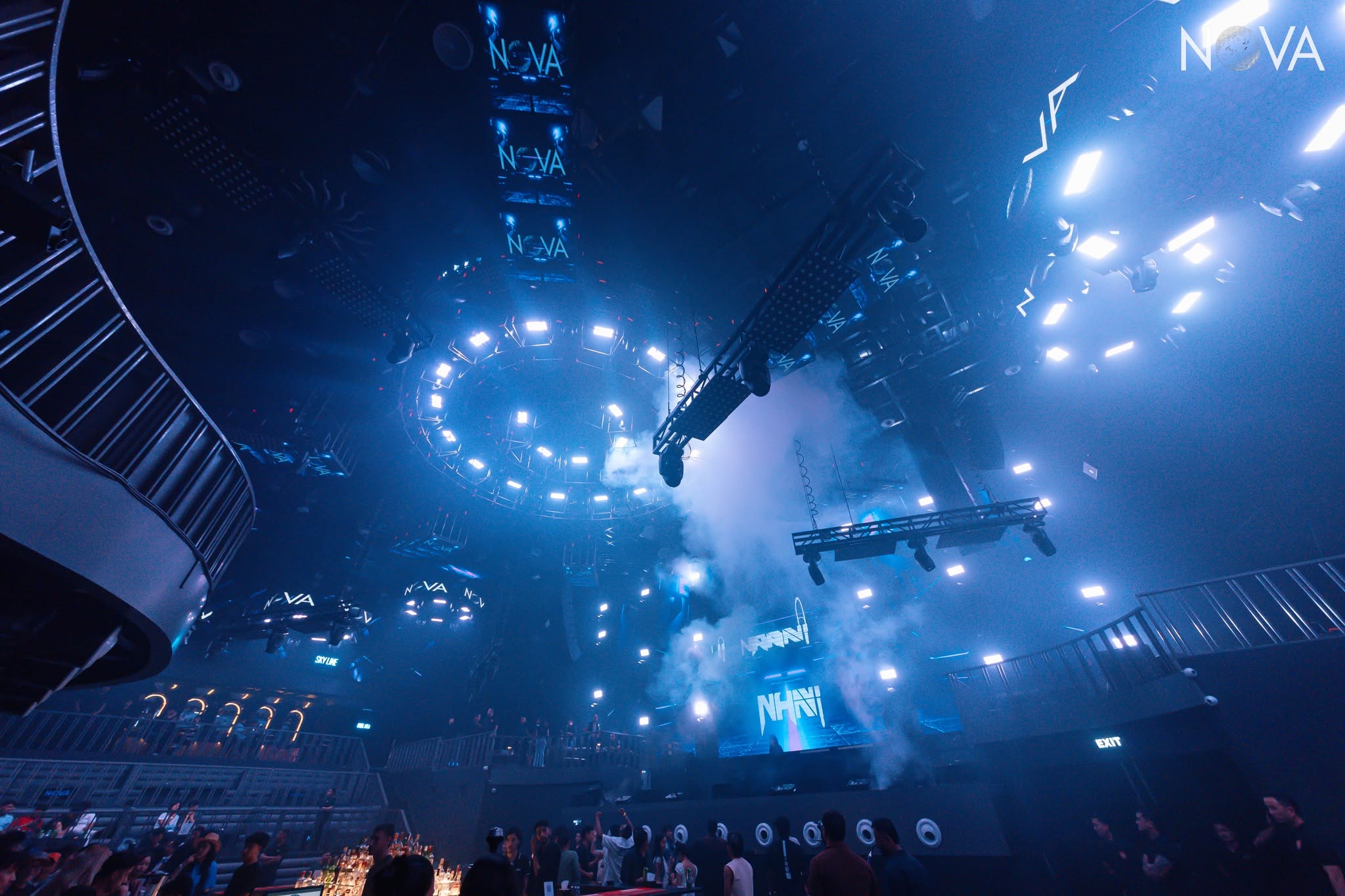
Club Nova is the strongest single answer for the discotheque format at full scale — largest floor in the country, hydraulic ceiling rig built for reflective materials, and a themed-night calendar worth following specifically for retro programming. Senate Club is the venue most explicitly committed to playing disco as a genre alongside techno and electro. Fire Club carries the city’s oldest claim to the discotheque name, having operated under it since 2001.
All three are worth different nights — and all three run late enough that a disco night in Kathmandu finishes at a time the original era would have recognized.
Plan your night
Experience Club Nova
VIP tables, private decks & event nights at Nepal’s largest nightclub in Thamel.